

Eye clarity in portrait photography is one of the most critical elements that determines whether a portrait feels professional, engaging, and emotionally powerful.
When viewers look at a portrait, their eyes instinctively go to the subject’s eyes first. If the eyes are sharp, the entire image feels more compelling. If they are soft or slightly out of focus, even a well-composed and beautifully lit photo can lose its impact.
This is why mastering eye clarity in portrait photography is essential for photographers at every level. Achieving consistent sharpness in the eyes is not just about using a good camera.
It involves understanding focus systems, choosing the right settings, controlling light, and developing a reliable shooting workflow. Modern cameras offer advanced tools like Eye AF, but relying solely on automation is not enough.
Knowing when to switch to manual control or adjust focus modes makes a significant difference in real-world scenarios. Another important factor is the relationship between technical precision and artistic intent.
While technical sharpness is crucial, the way the eyes interact with light, composition, and expression also contributes to the final result. A sharp eye combined with soft background blur creates depth and isolates the subject effectively.
This balance is at the core of strong portrait work. In addition, consistency is key. Professional photographers aim to achieve eye clarity in portrait photography across different lighting conditions, locations, and subject movements.
This requires both preparation and adaptability. From studio setups to outdoor shoots, understanding how different variables affect sharpness allows you to maintain quality in every shot.
Ultimately, eye clarity in portrait photography is not a single technique but a combination of decisions made before, during, and after the shoot.
By mastering focus systems, exposure settings, and lighting control, you can consistently produce portraits that capture attention and communicate emotion effectively.
Eye Clarity In Portrait Photography With Autofocus: Eye AF, Single Point, And Tracking Setup

Autofocus systems play a major role in achieving reliable eye clarity in portrait photography.
Modern cameras provide several focus modes, each suited for different shooting situations. Understanding how and when to use these modes is essential for maintaining sharp results.
Eye AF is one of the most powerful tools available today. It detects and locks onto the subject’s eye automatically, making it especially useful for portraits with shallow depth of field.
When used correctly, Eye AF can dramatically increase hit rate and consistency. However, it is important to monitor which eye is selected, especially in angled compositions. Single point autofocus offers more control.
By manually placing the focus point on the eye, photographers can ensure precise targeting. This method is particularly effective in controlled environments such as studio shoots, where the subject remains relatively still.
It also helps when Eye AF struggles in low light or complex scenes. Tracking autofocus is ideal for movement. When the subject is walking, turning, or interacting dynamically, tracking modes help maintain focus on the eye.
This is crucial for maintaining eye clarity in portrait photography in lifestyle or candid shoots. Custom settings can further improve performance.
Adjusting focus sensitivity, tracking speed, and priority settings allows photographers to tailor the autofocus system to their style. Combining these tools ensures that focus remains accurate across different scenarios.
Why Eye Sharpness Matters: Where Viewers Look First And How It Changes A Portrait
The importance of eye clarity in portrait photography is deeply connected to how people visually process images. Human attention is naturally drawn to faces, and within the face, the eyes are the most expressive and informative feature.
When the eyes are sharp, viewers feel a connection with the subject. This connection is what transforms a simple photo into a meaningful portrait. Sharp eyes create a focal anchor for the entire image.
Even if other elements in the frame are slightly soft or intentionally blurred, the eyes provide a point of clarity that grounds the composition. Without this anchor, the image can feel unbalanced or incomplete.
This is why professional portraits almost always prioritize eye clarity in portrait photography above all else. Eye sharpness also influences perceived image quality.
Many viewers may not understand technical photography terms, but they can immediately sense when something feels “off.” In most cases, that issue is related to focus.
If the eyes are not sharp, the image appears less professional, regardless of lighting or composition. Another key aspect is emotional storytelling. Eyes communicate mood, intention, and personality.
A sharp gaze can convey confidence, vulnerability, or intensity depending on the context. This emotional layer becomes much weaker when the eyes are not clearly defined.
For photographers building portfolios or working with clients, consistent eye clarity in portrait photography can significantly improve credibility. Clients often judge quality based on subtle details, and sharp eyes are one of the most noticeable indicators of skill.
Lighting That Supports Detail: Catchlights, Contrast, And Clean Exposure
Lighting is a crucial element in enhancing eye clarity in portrait photography. Even with perfect focus and camera settings, poor lighting can reduce perceived sharpness and detail.
Catchlights are small reflections of light in the eyes. They add life and dimension, making the eyes appear brighter and more defined. Positioning the light source correctly ensures that catchlights are visible and natural.
Soft lighting helps reveal detail without creating harsh shadows. Diffused light sources such as softboxes or window light produce smooth transitions that enhance facial features.
This supports eye clarity in portrait photography by maintaining detail in both highlights and shadows. Contrast also plays a role. Moderate contrast increases separation between tones, making the eyes stand out more.
However, excessive contrast can hide detail, especially in darker areas. Proper exposure is equally important. Overexposed images can wash out eye detail, while underexposed images can make them appear dull.
Maintaining balanced exposure ensures that all fine details are preserved. By controlling light direction, intensity, and quality, photographers can enhance both the technical and visual clarity of the eyes.
Camera Settings For Crisp Eyes: Shutter Speed, Aperture, ISO, And Stabilization
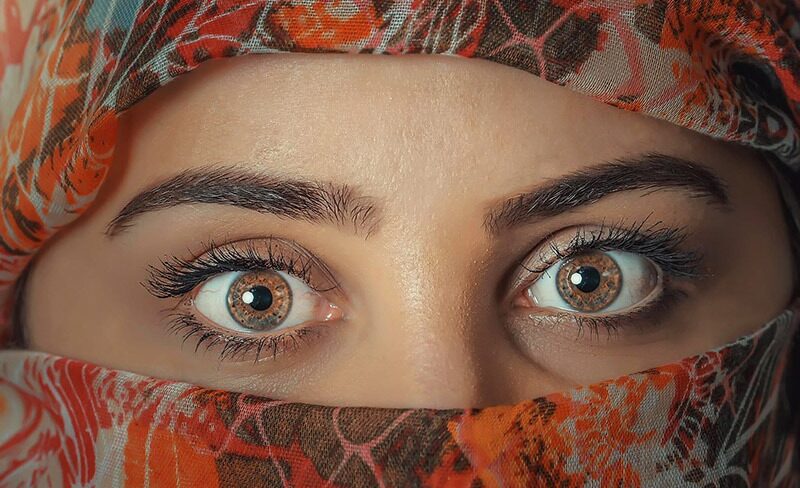
Camera settings are fundamental to achieving consistent eye clarity in portrait photography. Even with perfect focus, incorrect exposure settings can reduce sharpness or introduce blur.
Shutter speed is one of the most important factors. A speed that is too slow can cause motion blur, especially if the subject moves slightly. For handheld portraits, using at least 1/125 or faster is generally recommended.
For moving subjects, even higher speeds may be necessary. Aperture controls depth of field. Wide apertures like f/1.8 create beautiful background blur but also make focus more critical. A slight shift can cause the eyes to fall out of focus.
Using slightly narrower apertures such as f/2.8 can provide more margin while still maintaining separation. ISO affects image clarity by introducing noise at higher values. While modern cameras handle noise well, excessive ISO can reduce detail in the eyes.
Balancing ISO with available light is key to preserving eye clarity in portrait photography. Stabilization systems, whether in-body or in-lens, help reduce camera shake.
While stabilization does not freeze subject movement, it improves overall sharpness when shooting handheld. In low-light situations, this can make a significant difference.
Combining these settings correctly ensures that technical sharpness supports the focus system, resulting in consistently crisp eyes.
Eye Clarity In Portrait Photography Troubleshooting: Motion Blur, Missed Focus, And Quick Fixes
Even experienced photographers encounter challenges when working on eye clarity in portrait photography. Understanding common problems and their solutions helps maintain consistency.
Motion blur is one of the most frequent issues. It occurs when either the subject or camera moves during exposure. Increasing shutter speed or stabilizing the camera can quickly resolve this problem. Missed focus is another common issue.
This can happen due to incorrect autofocus mode or poor subject detection. Switching to single point AF or adjusting tracking settings can improve accuracy. Regularly reviewing images during a shoot helps catch these errors early.
Low light conditions can also reduce sharpness. In such cases, adding artificial light or adjusting ISO and aperture settings can help maintain eye clarity in portrait photography.
Lens quality and calibration should not be overlooked. A poorly calibrated lens can lead to consistent focus errors. Ensuring that equipment is properly maintained is essential for reliable results.
Finally, post-processing can enhance clarity slightly, but it should not replace proper technique. Subtle sharpening can improve detail, but overdoing it creates unnatural results.
By identifying and correcting these issues, photographers can consistently achieve strong and professional portraits with clear, sharp eyes.
See you in the next post,
Anil UZUN